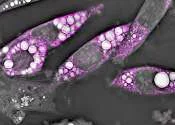
The gene APOE4 is the single strongest genetic risk factor for late-onset Alzheimer's disease, carried by a large share of the population and linked to a markedly higher chance of developing the condition. Yet despite its importance, scientists have struggled to explain exactly how the gene does its damage. New research offers a compelling clue, pointing to the process by which neurons acquire their protective insulation.
Nerve cells in the brain transmit signals along long fibres that must be wrapped in a fatty sheath called myelin, much like copper wire encased in plastic. This insulation allows messages to travel quickly and reliably. The study shows that APOE4 disrupts the cells responsible for producing that sheath, undermining the insulation of neurons and potentially slowing or destabilising the brain's communication networks. Because myelin damage is a hallmark of several neurological conditions, the finding ties Alzheimer's risk to a fundamental process of brain maintenance. Understanding this mechanism may help explain why APOE4 is so influential — and could suggest new ways to intervene.